
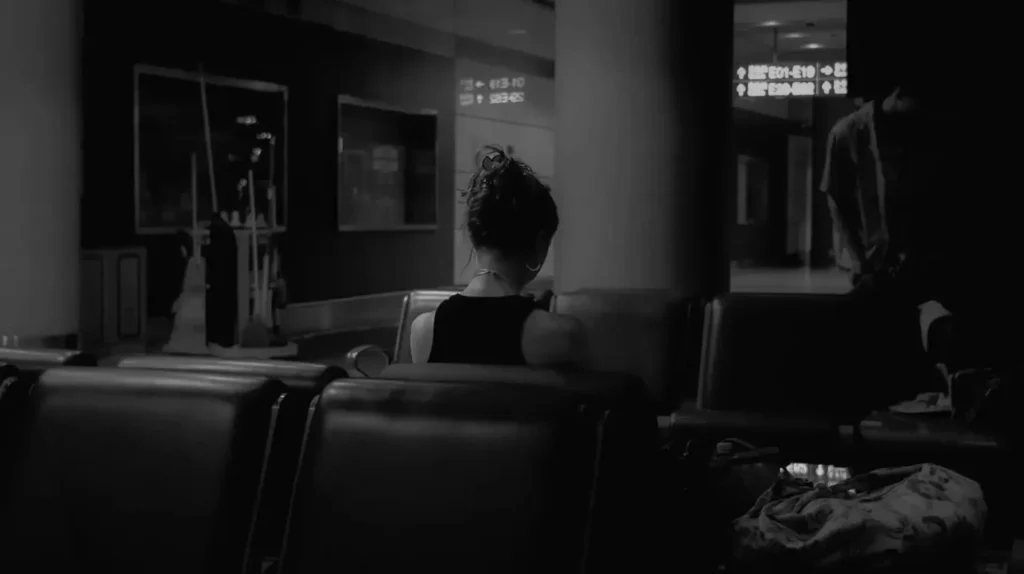
Photo by BLUE on Unsplash
Travelling with a weak passport means always being prepared for the worst. We imagine worst-case scenarios and rehearse answers to every possible question that immigration officers might ask us. But what happens when reality goes beyond anything you prepared for? When your mind could not even reach that scenario?
I wanted to include a story beyond my own experience. I reached out to other Pakistani travelers to understand whether the patterns I had experienced were shared or unique. Through a mutual contact, I spoke with Zara (name changed), a Pakistani woman who has lived in Dubai for several years with her husband. Both are professionals, frequent travelers, and UAE residents. On paper, they fit the profile of “legitimate” tourists.
As we spoke, she told me they had booked a seven-night trip to Georgia. They prepared every document required: return tickets, confirmed hotel bookings, valid UAE IDs, travel insurance, and $1,000 in cash each. They had heard stories of people being deported from Georgia or refused entry for not having sufficient funds. For Pakistani passport holders who are UAE residents, Georgia offers a visa on arrival.
They flew from Sharjah Airport and arrived at Tbilisi International Airport in the morning. After waiting in a long immigration queue, their turn finally came. The officer glanced briefly at their passports and then directed them to another counter without asking for any documents.
At the second counter, officers took their passports and simply said, “Just wait there.”
After about an hour, an immigration officer returned and delivered a short statement:
“The State of Georgia has decided not to grant you entry. You will be sent back on the next flight.”
There was no explanation. No documents were checked. They were simply denied entry.
They were then moved to a small room that felt like a detention area. Many other travelers were already there. They were told to wait until the next available flight arrived. Officers collected their phones and passports, preventing them from contacting anyone. Phones were allowed only briefly and only upon request.
According to Zara, this has been happening for months, perhaps even years. They were fortunate enough to catch a return flight within five hours and were sent back to Dubai. When they arrived at Sharjah Airport, authorities informed them that from every incoming flight, approximately ten to twelve passengers are sent back daily, especially those holding Pakistani or Indian passports.
Everything was lost: the hotel bookings, the flights, and the money they had saved for the trip. Yet Zara emphasized that the most painful aspect was not the financial loss. It was the realization that the refusal had nothing to do with missing documents. The decision felt random, unexplained, and ultimately discriminatory.
I could relate to Zara’s story because something similar happened to me in Georgia.
After landing at Tbilisi Airport, I was pulled aside at immigration, directed to a secondary counter, and told to wait. The officer examined my Pakistani passport, made a phone call, and said nothing more. I stood there for over an hour, watching other travelers pass through smoothly while I remained uncertain whether I would be allowed entry or sent back.
I had prepared every required document. Yet none of it seemed to matter.
The decision was not being made based on my documents; it was being made based on something I could not see or control.
After what felt like an eternity, the officer finally stamped my passport and waved me through.
I felt relief, but not triumph.
Zara had stood in the same hall, carried the same passport, and prepared in the same way. She was refused. The only difference between us was luck.

The officer’s statement“, The State of Georgia has decided not to grant you entry”, dissolves responsibility into an abstract authority that cannot be questioned. This logic reflects what Edward Said described as Orientalism: the classification of entire populations as inherently risky based on origin rather than individual conduct.
Zara and her husband were not evaluated through their documents or behavior; they were judged through their passports, markers already embedded with suspicion. The reported pattern of ten to twelve refusals per flight, primarily affecting Pakistani passport holders, suggests that these decisions are structural rather than individual.
Mimi Sheller conceptualizes this as mobility injustice: a system in which movement is unequally distributed not by merit or preparation, but by geopolitical positioning. When mobility rights are consistently denied to specific groups based on nationality and origin, sovereignty becomes a cover for structural discrimination.
Zara prepared thoroughly. She carried every required document.
Yet she was refused before a single document was checked.
Under unequal mobility regimes, legitimacy does not guarantee access, and preparation does not protect against refusal.