
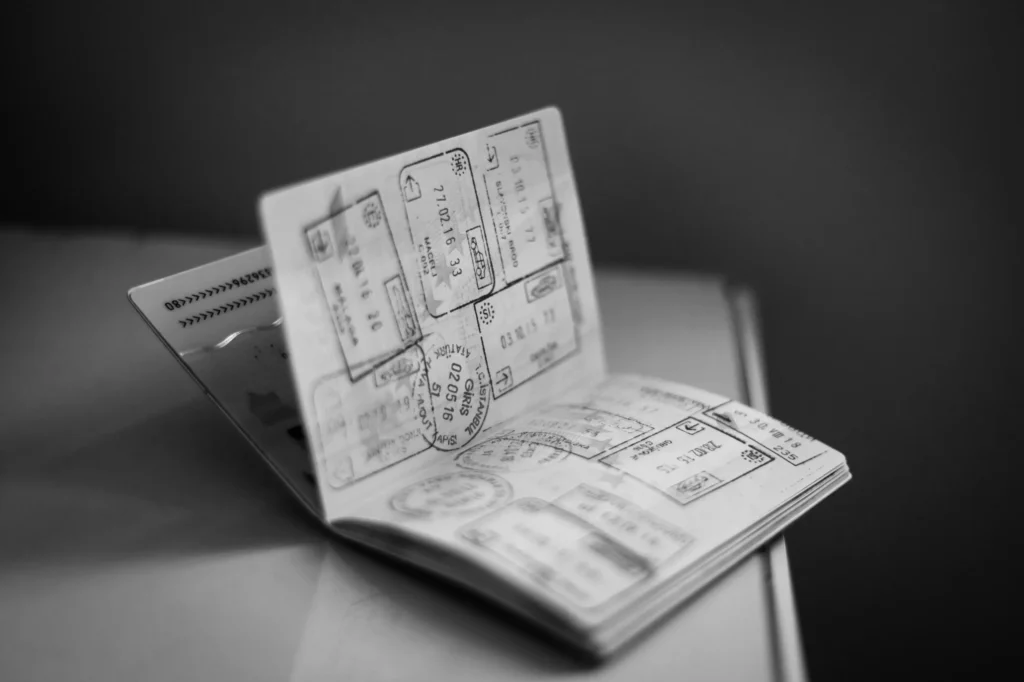
Photo by Global-Residence-Index on Unsplash
A passport appears simple: a small booklet, some colored paper, embossed text, and minimal biographical details. Yet these elements combine into something extraordinarily powerful. They communicate certain “truths” about a person, their history, and their place in the world.
Citizenship is randomly assigned at birth, yet this simple booklet ritualizes that accident of geography into life-determining power. It controls where you can live, work, travel, and whether you’ll be welcomed anywhere else. But this wasn’t always the case. Let’s trace how this booklet became one of the world’s most powerful sorting mechanisms.
When the World Was Open:
Anam Soomro points to Stefan Zweig’s melancholic critique of the passport system that suddenly emerged at the onset of the First World War and forever changed mobility. He captured this transformation perfectly:
Before 1914 the earth had belonged to all. People went where they wished and stayed as long as they pleased. There were no permits, no visas, and it always gives me pleasure to astonish the young by telling them that before 1914, I travelled from Europe to India and America without a passport and without ever having seen one.
The Great Restriction: How War Changed Everything
Then came August 1914, and everything changed.
As Europe plunged into World War I, governments frantically implemented “temporary” security measures. Passports became mandatory for everyone. Border controls, justified as wartime necessities, sprouted across continents.
When the war ended, what started as temporary became permanent. Wartime necessity became standard practice for international mobility. As the historian of passports John Torpey puts it, the birth of the passport allowed states to monopolize the legitimate means of movement. Through specific techniques of identification, states achieved total territorial control over populations, effectively distinguishing between insiders and outsiders.
The Birth of Passport Privilege:
The new system didn’t affect everyone equally. From the beginning, passport power was correlated with political power. As Soomro demonstrates, fin-de-siècle mobility governance was centrally about racial discrimination. Historians of twentieth-century migrations have outlined the centrality of race as a rationale for organizing human mobility; they have also shown that passports and papers were key tools through which this racial discrimination was conducted.
What sociologist Yossi Harpaz calls “conspicuous mobility” emerged from this hierarchy. Strong passports signal trust and belonging to the “right” side of the world, while weak passports signal risk, regardless of the individual holding them. These patterns, established in the early 20th century, created a system in which birthplace determines global access.
This hierarchy deepened throughout the 20th century, but it was September 11, 2001, that intensified these inequalities in ways that persist today.
After 9/11: When Discrimination Became Data
Research on post-9/11 visa policies reveals troubling patterns. Yasin et al. point out that travelers from the Global South faced intensified scrutiny and routine discrimination, with racial differences significantly predicting visa waiver eligibility even when economic and political factors are considered.
The numbers tell the story starkly: visa costs can amount to several weeks or months of mean income for Global South passport holders, while remaining pocket change for wealthy country citizens.
Mark Salter argues that contemporary mobility is filtered through “security logics” that claim to be neutral but function to reproduce inequality. Post-9/11 visa regimes use the language of security to reinforce existing global hierarchies.
Contemporary Passport Hierarchies:
The Pakistani passport currently ranks 98th on the Henley Passport Index, providing visa-free access to only 31 countries. This contrasts sharply with the pre-1914 era, when passports were not required for international travel. Today’s restrictions emerged from political decisions made during World War I and intensified after September 11, 2001.
Ayelet Shachar termed this a “birthright lottery,”: citizenship assigned at birth determines lifelong mobility rights. These hierarchies continue shaping who can move freely and who cannot.
Historical Origins and Modern Impacts:
Understanding this history matters. The passport system isn’t natural or inevitable; it emerged from specific political decisions over a century ago. Those decisions created hierarchies that still determine life chances based on birthplace.
For Pakistani passport holders, this legacy isn’t abstract. It’s lived daily in the anxiety before travel, in visa applications that take months and cost thousands, and in the administrative suspicion embedded within the document itself.
The following episodes examine what these hierarchies mean in practice, documenting the lived experience of traveling with a Pakistani passport.