

Photo by Long (lTiga) Nguyen on Unsplash
Growing up in a small town in Pakistan, I imagined foreign countries as distant, almost mythical worlds. Travel felt like a possibility, not paperwork. I had not yet understood visas, permits, or border controls. I only knew that “abroad” meant a world unlike mine.
I was still young when I first had the opportunity to visit my father in Dubai. I remember the excitement clearly, but also the sudden introduction to bureaucracy. I accompanied my family to the passport office, watched documents being collected and attested, and saw how much effort preceded a single journey. Although I was not responsible for the paperwork, I understood that my physical presence was required at every step. Travel was already procedural.
My first awareness that mobility was conditional came before we even reached the airport. Our international flight departed from Islamabad, which meant we had to travel a full day early and stay at my uncle’s home. Even before crossing a border, our restricted mobility shaped our movements, where we could depart from, when we had to leave, and where we needed to stay. The journey had already begun to discipline us.
The night before the flight remains vivid in my memory. We were packing when my uncle returned from work carrying a stack of printed documents. I remember the sound of crisp papers as he placed them carefully on the table: visas first, then return tickets, then hotel confirmations. Each document represented months of preparation and financial investment.
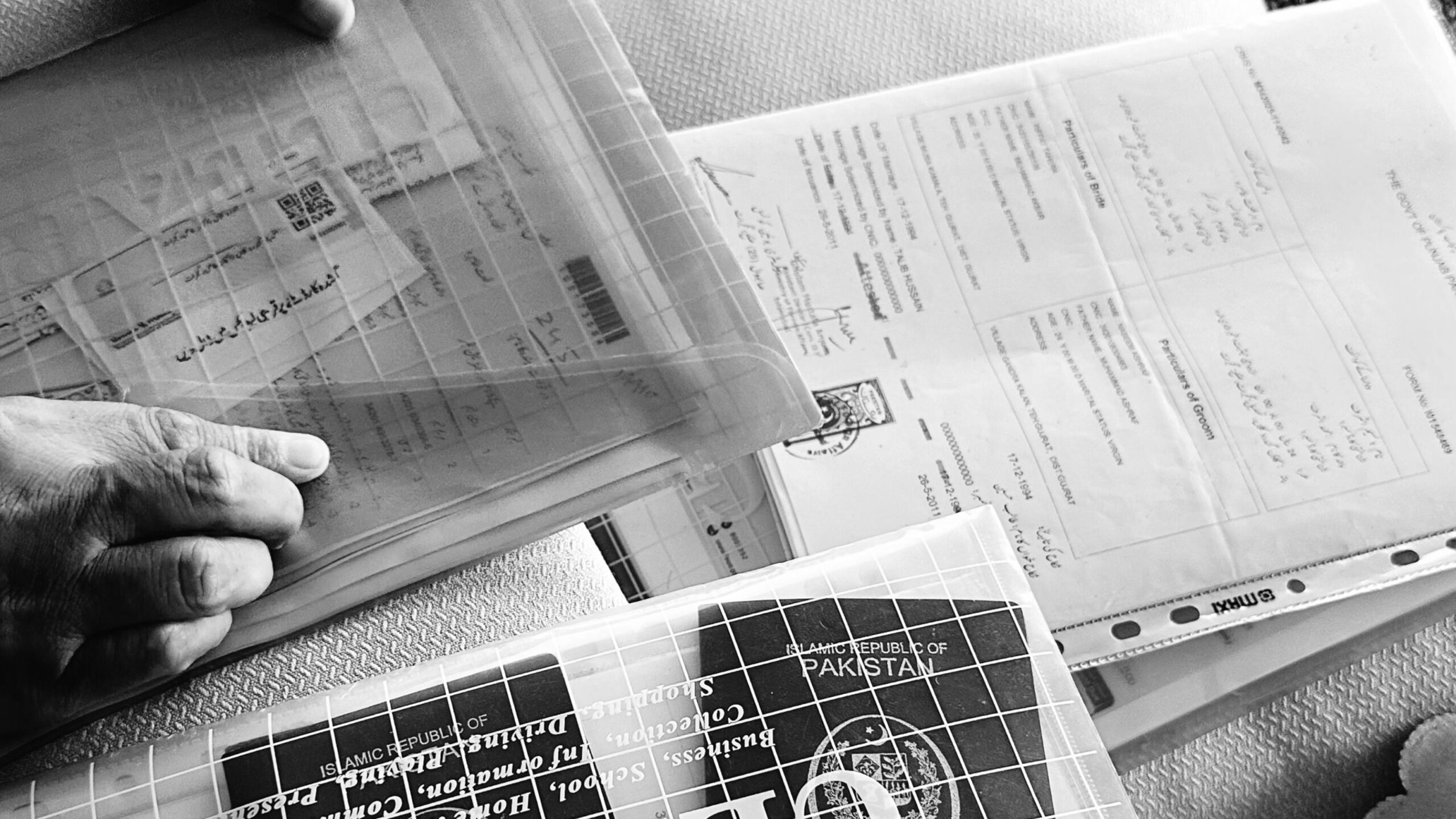
He looked at me and said, “Listen carefully.”
He explained how to stand at the immigration counter. Which document to present first. How to answer questions briefly and factually. He rehearsed the questions they would ask:
Why are you visiting? Who is here? How many days are you staying? When are you going back?
Not to volunteer unnecessary information. Not to appear nervous. His instructions were precise, almost rehearsed.
In that moment, I learned my first lesson in border performance.
I learned this ritual as an initiation into silent, bureaucratic compliance. The instructions felt like a detailed script for survival in a space I had never seen. I immediately understood that the airport was a highly conditional place for us, demanding perfect, unquestioning obedience. It was a high-stakes arena where I had only one chance to perform the role of the “trustworthy traveler.”
As the eldest child, I felt responsible for mastering these instructions. The necessity for perfect compliance meant that failure would lead to bureaucratic refusal and the loss of the family’s significant investment. This pressure created an intense internal conflict. My stomach twisted. What if I forgot something? What if I answered wrong?
I had to project calm confidence while internally wrestling with the immense cognitive load. This performance of trustworthiness, driven by the constant awareness that an authority figure was seeking a flaw, marked the moment I internalized the disciplinary gaze. This initial pressure established the enduring pattern of anticipatory performance that has defined my movements ever since.
This first experience revealed something fundamental. The structural stigma attached to my passport wasn’t abstract, it was a physical weight. Every procedure carried the risk of failure, and that risk lived in my body.
Years later, I would understand that moment through Erving Goffman’s dramaturgical framework. I learned to transform myself at the airport, turning it into what Goffman calls a “front stage”, a space requiring careful preparation of an immaculate appearance and heightened impression management. This encounter involved balancing internal, backstage anxiety with projected confidence.
This high-stakes performance created a defensive pattern, what Shahram Khosravi describes as the self-disciplining effect of border surveillance. I had to anticipate suspicion before it arrived, preemptively disarming it to secure safe passage.
What I internalized that night was not simply procedure, but hierarchy. Every document carried risk. Every answer required calibration. I learned that mobility was not a right but a privilege that had to be constantly proven.
That first experience established a pattern that continues to shape my movements. The script has evolved, new documents, new destinations, new requirements, but the choreography remains.
Each time I approach a border, I feel the anticipatory performance in my body. I am prepared, composed, and rehearsed.
I am always proving, always performing, always one mistake away from refusal.